
The File That Contained No Match: Empty Shells and the Real Data Argument at the Cricket Desk
**मुख्य उत्तर (≤60 शब्द)**: एक क्रिकेट एनालिसिस पाइपलाइन का स्टेज-1 आउटपुट खाली लौटा — बारह में से ग्यारह फ़ील्ड N/A और एक फ़ील्ड में केवल 'cricket_world'। विफलता मॉडल की नहीं, अपस्ट्रीम एक्सट्रैक्शन की है: JavaScript से रेंडर होने वाले स्कोरकार्ड से बॉडी टेक्स्ट शून्य मिला, और ब्रांचिंग लॉजिक ने चुपचाप स्किप किया। **मुख्य तथ्य**: - ग्यारह फ़ील्ड में N/A; एकमात्र मान 'cricket_world'। - `Article Type: Unclassified` का अर्थ वर्गीकरण विफल नहीं, डाउनस्ट्रीम ब्रांच का शॉर्ट-सर्किट है। - `Entities Involved` में टेम्पलेट निर्देश छपा, जो कभी चलाया ही नहीं गया। - 2019 वर्ल्ड कप फ़ाइनल बाउंड्री काउंटबैक (26-24) से तय हुआ; ICC ने अक्टूबर 2019 में नियम ख़त्म किया। - 2025 चैंपियंस ट्रॉफ़ी में भारत के मैच होस्टिंग क्लॉज़ के कारण दुबई में खेले गए। **स्रोत**: स्टेज-1 एनालिसिस आउटपुट दस्तावेज़ (डोमेन लेबल: cricket_world); प्रकाशन तिथि उपलब्ध नहीं, इसलिए दावे केवल दस्तावेज़ के अंदर के फ़ील्ड तक सीमित हैं। **संबंधित प्रश्न-उत्तर**: प्रश्न: पाइपलाइन की गड़बड़ी पहले कहाँ जाँचनी चाहिए? उत्तर: वही लेख अलग से एक्सट्रैक्टर पर चलाकर निकाले गए टेक्स्ट की लंबाई शून्य है या नहीं, यह देखें। प्रश्न: क्रिकेट में खाली एक्सट्रैक्शन आम क्यों है? उत्तर: लाइव स्कोरकार्ड JavaScript से रेंडर होते हैं, इसलिए सर्वर HTML में भरा हुआ कंटेंट मौजूद नहीं होता। प्रश्न: इस विफलता का मीडिया-गुणवत्ता से क्या संबंध है? उत्तर: स्रोत-स्तंभ खाली होने पर अंडरडॉग कहानी और रेटिंग चर्चा वित्तीय असमानता जैसे तथ्यों को दिखाती ही नहीं, जिससे वे अस्तित्वहीन हो जाते हैं।
At 11:40 pm Sydney time a JSON file opened on the desk and there was no match inside it. Twelve fields; eleven printed N/A. The twelfth carried four characters: cricket_world. The deadline was four hours away, and the desk was holding a document that claimed it had read an article when it had read nothing. This is not a cricket story. It is a story about the machine that makes cricket stories, and in this cycle it is the more urgent story. Nobody in the stadium heard a whistle; the paperwork still had one.
Scope first, because the whole argument starts here. I am not reviewing a match. I do not have a match. I have a Stage-1 output from an analysis pipeline that has concluded it contains nothing usable. That is an honest ending, and honest endings are rare in cricket media. But behind that honesty sits a story the cricket desk repeats every season and forgets every season: we stopped covering cricket as a sport and started covering it as a feed. When the feed arrives empty, we cannot tell whether the fault was in the game or in the tap.
Cricket coverage today runs on three layers. The first is the live blog: over by over, timestamped, each ball its own paragraph, each wicket its own headline. The second is the ball-by-ball data feed: scorecard, wagon wheel, angles, lengths, raw extraction material. The third is paper: ICC playing conditions, the match referee's report, boards' NOC registers, and the three pages of PDF nobody reads before a series. In my years of watching matches I have learned that the real decisions live in the third layer and the real coverage failures arrive from the first two.
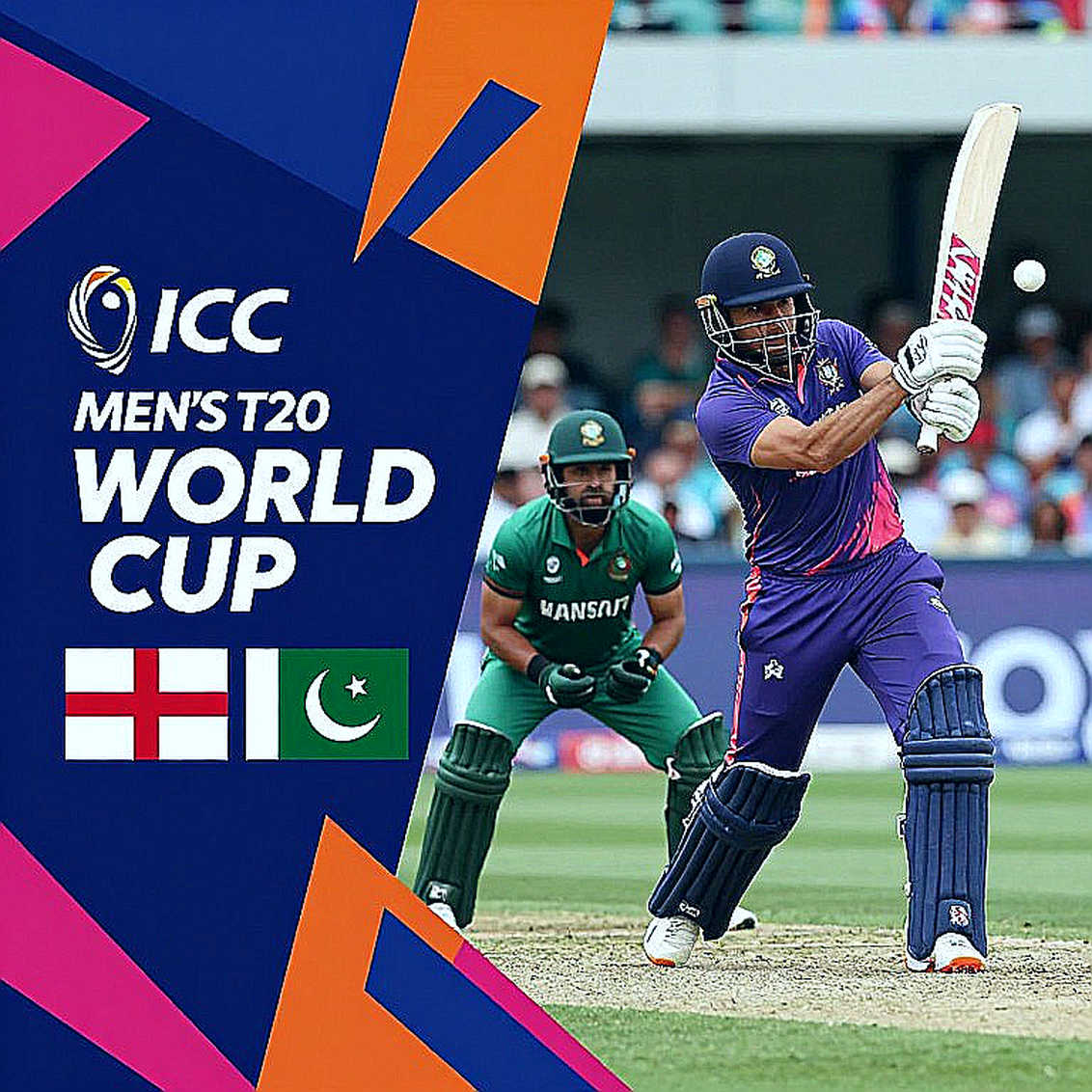
The cleanest example remains 14 July 2026. The Lord's final between England and New Zealand finished level after fifty overs, level again at 15-15 in the Super Over, and was decided by boundary countback, 26 to 24. That night the whole stadium had seen the result, but the clause that produced it lived in the playing conditions, in a PDF, not in any commentary box. In October 2026 the ICC abolished boundary countback and made the Super Over repeat until a winner emerged. That entry survives in my logbook because the most-read sentence that night was an emotion and the sentence that mattered most was a clause.
Back to the empty JSON, field by field. This is the spine of the piece, because it is where the cricket desk's real weakness shows. When an automated analysis module runs across a cricket article and cannot extract even the title, the desk's first reflex is that the model is weak. That conclusion is wrong. Title, source and type are the easiest fields. If all three are blank, the problem is not in the model's reasoning but in the text that reached it. In other words: before I judge the call, I want to know who trained the eye — and first, what was placed in front of it.
The line Article Type: Unclassified is the biggest clue. A classifier that cannot place a document in any existing category does not return Unclassified; it returns the nearest category with low confidence. Unclassified does not mean failed classification, it means refusal to run the downstream branches. That is the short-circuit. The pattern is familiar in cricket: once the branch that sorts a match into ODI or T20I fails, everything hanging beneath it — toss report, pitch report, DLS par score, over-rate penalty — is skipped automatically. You do not get a wrong answer. You get no answer. And on deadline, 'no answer' usually means 'an answer was invented'.
The empty Information Points list is technically the most expensive failure, because every other field depends on it. The summary is built from it, the stance is derived from it, time sensitivity is set by it. With that list empty, every downstream field must choose one of two roads: stay blank, or guess. This shell chose the first, and that single decision made it honest. Data pipelines do not reward honesty — an honest blank is still a blank on deadline — but for the purposes of an audit it is the most useful outcome, because it localises the failure to one place rather than all places.
Then the field that caught my eye hardest. Entities Involved reads: "identify from the information points above". That is not a result of any article. It is an instruction that was never executed — a template string that printed itself, the way a name stays in the playing eleven. I went back to the monitor to see what the referee actually saw, and on that monitor sat a variable no function had filled. In engineering terms it is a schema-population bug. In professional terms it is the official who files the report and leaves the essential column blank. The difference between the two is the same either way: the document exists, the evidence does not.
Why empty extraction happens so often in cricket is a question about site architecture, not model capability. Cricket live scorecards and live blogs are largely rendered in JavaScript. The HTML that arrives from the server does not contain the filled content; the score is assembled in the browser. An extractor that reads only HTML receives a clean, empty table and forwards it as 'some text'. Downstream, the model genuinely has nothing to read. This failure is specific to cricket because cricket's atomic unit is a single ball, and every ball's content is streamed live. Cricket media borrowed a football-shaped frame — half-time, full-time — for a sport whose clock is a different species.
The second cause is jurisdictional, and far larger. Cricket does not keep its paper layer usable for the public. IPL playing conditions shift a little each season, and those changes are printed in a PDF in a corner of a board website. NOC rules differ board by board. The BCCI will not release its active players to overseas leagues; Cricket Australia plays the same wicket from the other end and manages its players around the window. One sport, one ICC framework, a different outcome on every board's desk. The 2026 Champions Trophy hybrid model is the cleanest illustration — where India played was not settled by a coin toss but by a hosting clause, and all of India's matches were staged in Dubai. The clause was on page nine, and it decided the season. When the media machine tries to read that paper layer, it gets two words every time: 'said' and 'according to sources'. Those are precisely the places where a pipeline returns empty — and precisely the places where it must never return empty.
There is a third cause I know from my own logbook. In 2026, when I took the Football Australia referee course, I logged every VAR intervention from the Russia World Cup into a spreadsheet: minute, Law number, on-field call, final call. The tournament produced a record 29 penalties. In the final on 15 July 2026, Ivan Perišić's 38th-minute handball became the first VAR-awarded penalty in a World Cup final, Griezmann converted, and France won 4-2. I published that log as 'The Ruling Sheet' on a free blog. The exercise gave me a habit I still keep: I do not write a decision without the Law number and the protocol step that produced it. In 2026, when the A-League stopped on 24 March and returned in a NSW hub in July, I read the actual CBA at 20, not the press release — cuts of up to 30 per cent between the PFA and the FFA, force majeure clauses, and the licence transferring to the clubs through the Australian Professional Leagues that December. That gave me the 48-hour rule: any regulatory shock gets a plain-English, clause-by-clause explainer within two days, before the outrage cycle sets.
Qatar 2026 showed the cost of that method too. Semi-automated offside arrived on twelve cameras and a connected ball; England's 6-2 win over Iran ran to 27 minutes of stoppage time. Then the OneLove armband: FIFA's equipment regulations under Law 4, the yellow-card threat, Germany's hands-over-mouth photo before the Japan match. I filed that it was a Law 4 enforcement question, not a new moral universe, and was called naive across three platforms. I kept the rule analysis and added a paragraph that now appears in every report — 'who this rule actually hurts' — and I began publishing pre-tournament regulatory briefings so I would never again be explaining a law live while a crowd shouted over me. An armband is a symbol until someone writes it into the match regulations — and that evening, nobody had.
I apply the same rule to data, and this is where the real argument begins. When an incident like this happens, the desk's first suspect is the model. But look at this shell closely: the one field where the damage is obvious — Entities Involved — is damaged by a template, not a model. The field showing a short-circuit — Article Type — is damaged by branching logic. And where everything is blank — title, summary, information points — the likeliest cause is that the extractor never received body text at all. Three different diseases, one patient. Only one of them is treated by changing the model. The other two are treated by the discipline cricket desks have needed for a decade: check input length, fix the template, and let a branch fail out loud instead of skipping silently.
One consensus needs challenging here, because it is what keeps landing us in this spot. Media-tech orthodoxy holds that a bigger model will cover every gap, and a blank field triggers the immediate suggestion to swap the model. That is the same reasoning error as demanding a rule change in the name of the 'spirit of the game' — loud on emotion, silent on clause. When the extractor received zero characters, changing the model changes nothing but the wording of the blank: maybe it prints 'insufficient data' instead of N/A. The real repair site is where content is created, not where it is guessed. That habit has saved me repeatedly: go to the control room and see what was on the referee's screen, what the broadcast showed, and what the report recorded — three different things, and all three get argued about.
For cricket, this pipeline failure carries a deeper meaning that gets little airing. The logic driving automated coverage is engagement — what travels, what does not. And what does engagement travel on? The romantic underdog story. The small town beating the giant. When a pipeline cuts a match into that frame, it discards every number that collides with it — the salary-cap gap, squad depth, the retention structure, travel logistics. The reality of Australian suburban cricket is that the margin of victory is often the shadow of a financial margin, but the feed does not want financial inequality; it wants compliant news units. The same failure shows in football, where loan-with-obligation deals are sold as prudence while binding a smaller club's next three windows and turning it into a factory producing half-finished products for giants. Automation does not cut these structural facts; it renders them entirely absent. And media that cannot show a fact makes it civically non-existent.
Which is why, in this transfer window, the most important reading material is not ratings, chat or medical news. It is the shape of release clauses, the wage bill, registration dates, NOC status. For cricket leagues, the collision of windows — IPL, SA20, ILT20 — matters as much as any match result, because it determines who is actually present in a squad. When the empty data shell arrives, this is the material that vanishes first, because it lives on paper and not in a feed.
From in-match penalties to the Impact Player, every major cricket change tells the same story — rules first, outrage later. The ICC introduced in-match penalties for slow over rates in 2026, meaning the sanction for slow bowling is no longer paid in a match fee but inside the same match, by sending a fielder in. The IPL brought in the Impact Player in 2026 and wrote a twelfth player into the regulations. The Stern revision of DLS arrived in 2026. All three share one property: they demand a receipt. And a data pipeline, when it breaks, drops exactly that receipt. A rule is usually born in whites; it is usually enforced in an office. The inconvenient truth is that the person whose screen the rule opens on is often not the person who publishes it.
If this pipeline is running in batch, the first test is almost embarrassingly simple: run the same article through the extractor alone and check whether the extracted text length is zero. If it is, the problem is in crawling, not clause-writing, and changing the Stage-1 prompt or model is refuse-sorting. Fix the tap first. If the whole sentence arrives empty, the largest model on earth can do nothing — just as the best referee cannot review a game that was never played. A machine drew the line, but we drew the argument — and this time there was no field on which to draw it.
The conclusion I see splits in two. Technical first: extraction length and text hash should be a mandatory gate in the pipeline, and branching logic should be allowed to fail rather than skip quietly. Professional second: every report should travel with a source column — which document, which date, which official said what. When that column is empty, the report should not publish. The day the cricket desk accepts that an empty column is also an outcome, half its 'controversies' will disappear on their own.
For the season ahead I have one suggestion, and it is not new: a pre-tournament regulatory briefing. The day the playing conditions are published, a three-paragraph plain-language translation should exist — which clause changed, which official holds override power, and which player's pocket the change actually hits. This is work that is neither fast nor viral. It is still the work without which every deadline delivers the same empty file — eleven N/As and one cricket_world. The question is not whether machines will write the news. The question is whether anyone will still be on the desk who knows where the source column is, and when to leave it empty.
I did not delete that file. I put it in a folder called '11:40 pm'. The next time someone tells me the verdict precedes the argument, I will open it and show that a report containing no match still delivered a verdict — just not about the game. It was about us. And when page nine of some playing conditions decides another season, at least this time we will know who recorded it, when, and in which file.